
Scaling and root planing: what to expect
If you’ve been told you need a deep cleaning, here’s what the procedure involves, why it works, and what recovery looks like.
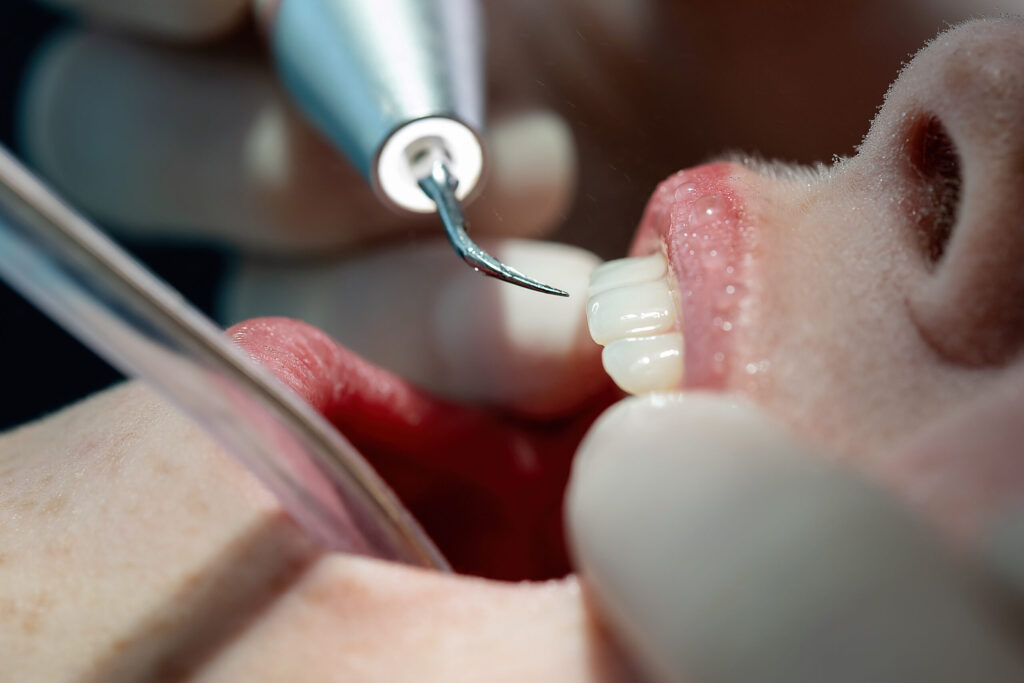
What scaling and root planing actually does
Often called a “deep cleaning,” SRP is the most effective non-surgical treatment for gum disease. It’s a different procedure for a different condition, not just a more thorough regular cleaning.
A clinical decision, not a sales pitch
A regular cleaning removes plaque and tartar from tooth surfaces and just at the gumline. It’s right for healthy gums; our comparison of deep cleaning vs. regular cleaning walks through the difference.
When pockets have deepened to 4mm or more, bacteria sit where a regular cleaning can’t reach. Recommending SRP at that point is based on your pocket measurements, and a regular cleaning won’t resolve the infection.
At a glance
- Visits Usually 2, one per side
- Time 45–60 minutes per side
- Comfort Local anesthetic
- Recovery A few days of tenderness

Book a visit
No rush. No judgment. No surprises.
What to expect during treatment
Numbing
Local anesthetic keeps you comfortable. You’ll feel pressure and movement, but not pain. Let us know about dental anxiety beforehand.
Scaling and planing
We clean the root surfaces below the gumline, then smooth them. About 45 minutes to an hour per side.
Recovery
Expect some soreness and sensitivity for a few days. Pain relievers and warm salt-water rinses help. Stick to soft, lukewarm foods for a day or two.
Follow-up
Several weeks later, we re-measure your pockets to see how the tissue responded and set your maintenance schedule.
What comes after scaling and root planing
Most patients move to periodontal maintenance, professional cleanings every 3–4 months instead of every six. Periodontitis needs ongoing management, and more frequent cleanings keep bacteria from re-colonizing the pockets.
With good home care and consistent visits, many patients see their pocket depths stabilize or improve. For typical fees and insurance, see gum disease treatment cost.
Ongoing care
- Maintenance cleanings Every 3–4 months
- Pocket measurements Tracked over time
- Goal Disease kept under control
Book a visit
No rush. No judgment. No surprises.
Common questions
Does scaling and root planing hurt?
How is a deep cleaning different from a regular cleaning?
Does insurance cover scaling and root planing?
How long does it take?
How long is recovery?
Can gum disease come back after SRP?
Book a visit
No rush. No judgment. No surprises.