
Root canals that save your tooth — and end the pain.
A root canal clears the infection inside your tooth and relieves the pain, so you can keep the tooth instead of losing it.
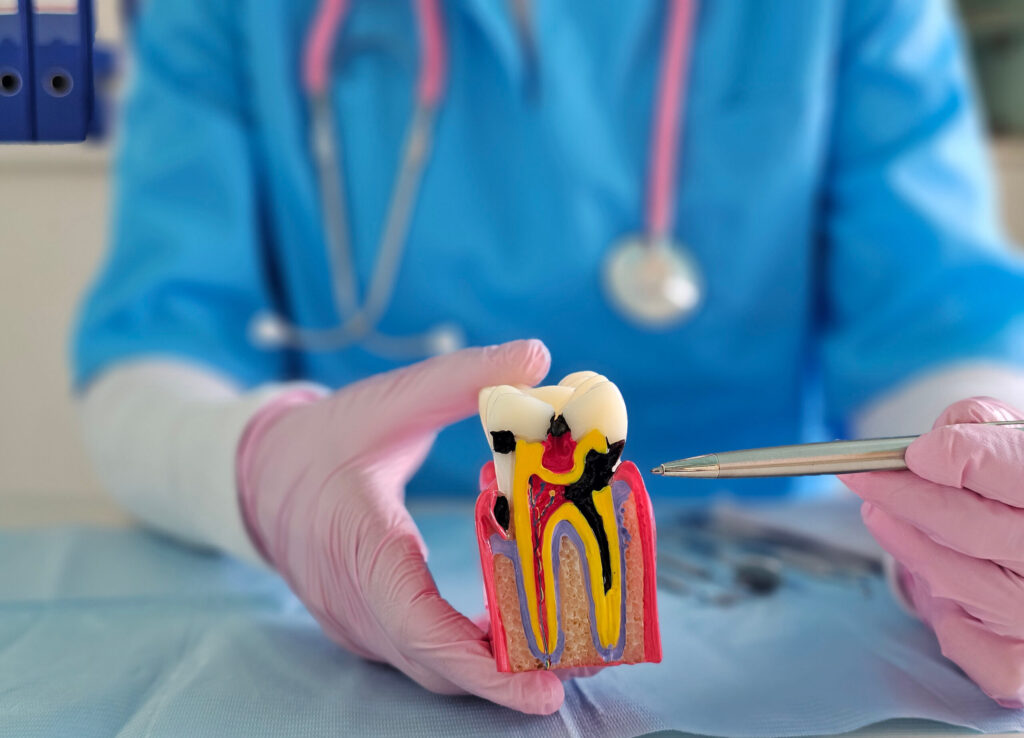
How do I know if I need a root canal?
A few signs tend to show up when the nerve inside a tooth is infected or inflamed. Only an exam and an X-ray can confirm what’s happening inside the tooth.
If you’re in pain right now, see what to do about a toothache while you wait for your appointment. We can often see urgent, infected-tooth cases the same day.
Common warning signs
- Lingering pain Doesn’t settle down
- Hot or cold sensitivity Lasts after the trigger
- Pain when biting Chewing hurts
- Gum bump or swelling Pimple-like spot
- Darkened tooth Compared to its neighbors

Book a visit
No rush. No judgment. No surprises.
What happens during a root canal
We numb the tooth completely
The tooth is thoroughly numbed before we begin. Most patients say it feels similar to getting a filling.
We remove the infection
We remove the infected or inflamed pulp inside the tooth, then clean and shape the inside.
We seal and protect it
We seal the tooth and, in most cases, place a dental crown afterward to protect it. It usually takes one to two visits.
Root canal vs. extraction
Both are legitimate options. We’ll walk you through what applies to your specific tooth before you decide.
Book a visit
No rush. No judgment. No surprises.
Common questions
Does a root canal hurt?
How much does a root canal cost?
How long does a root canal take?
Do I need a crown after a root canal?
What happens if I wait?
Is it better to just pull the tooth?
Book a visit
No rush. No judgment. No surprises.