
How to prevent cavities
Cavities are almost entirely preventable. Here is what causes them, the daily habits that stop them, and how your dentist helps you stay ahead.
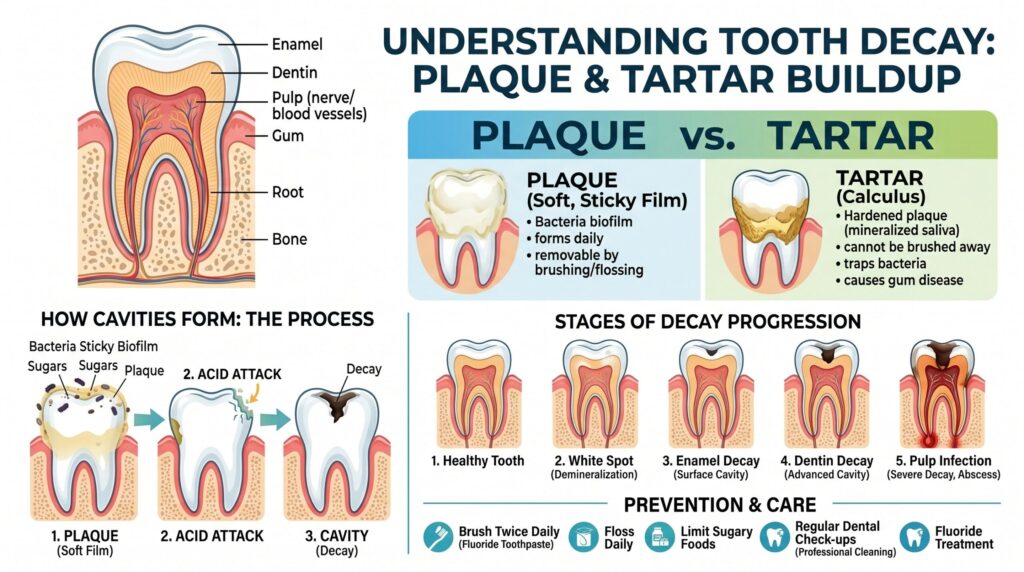
What actually causes a cavity
A cavity is the end result of a simple chain. Bacteria in your mouth feed on sugars and starches from what you eat and drink. As they feed, they produce acid. That acid pulls minerals out of your enamel, and over time the weak spots break down into a cavity.
Two things speed this up. Tartar, the hardened buildup brushing cannot remove, gives bacteria more surface to cling to. And nighttime teeth grinding can wear enamel thin, leaving it easier to break down. The good news: every link in that chain responds to a few consistent habits.
Bacteria + sugar
Bacteria feed on sugars and starches in your mouth.
Acid
As they feed, the bacteria produce acid.
Mineral loss
Acid pulls minerals out of your enamel.
Cavity
Weak spots break down into a cavity over time.
The habits that prevent cavities
Four consistent habits handle the vast majority of cavities. None of them is complicated.
Due for a cleaning? Book your visit and stay ahead of cavities.
What your dentist does that home care cannot
Daily habits do most of the work, and a few things still need a professional. Your care team removes hardened tartar that a toothbrush cannot budge. A fluoride treatment adds enamel protection beyond what toothpaste gives. And a regular exam catches early decay while it is still a soft spot, before it turns into a cavity that needs a filling.
Catching a problem at the early stage is the whole point. A weak spot can often be remineralized and watched. A full cavity needs to be treated. Staying on a regular schedule is what keeps you on the easier side of that line.
Learn about professional cleanings Learn about fluoride treatments
“I brush and floss and still get cavities”
Some people do everything right and still get cavities, and it is not a personal failing. Enamel strength varies from person to person. Dry mouth, often a side effect of common medications, removes the saliva that normally washes away acid and helps repair enamel. Genetics, the shape of your teeth, and certain health conditions all play a role too.
If this is you, the answer is more support, not more guilt. More frequent cleanings, fluoride treatments, and a look at what is driving the risk can change the pattern. Tell your care team what you are experiencing, and they will build a plan around it.
If this sounds like you
Common questions
How do you prevent cavities?
Why do I get cavities even though I brush?
Does sugar cause cavities?
Can a cavity be reversed?
How often should I see the dentist to prevent cavities?
Book a visit
No rush. No judgment. No surprises.