
Deep teeth cleaning vs. regular cleaning: what’s the difference?
If you’ve been told you need a deep cleaning, here’s what that actually means, why it’s different from a regular cleaning, and what to expect.
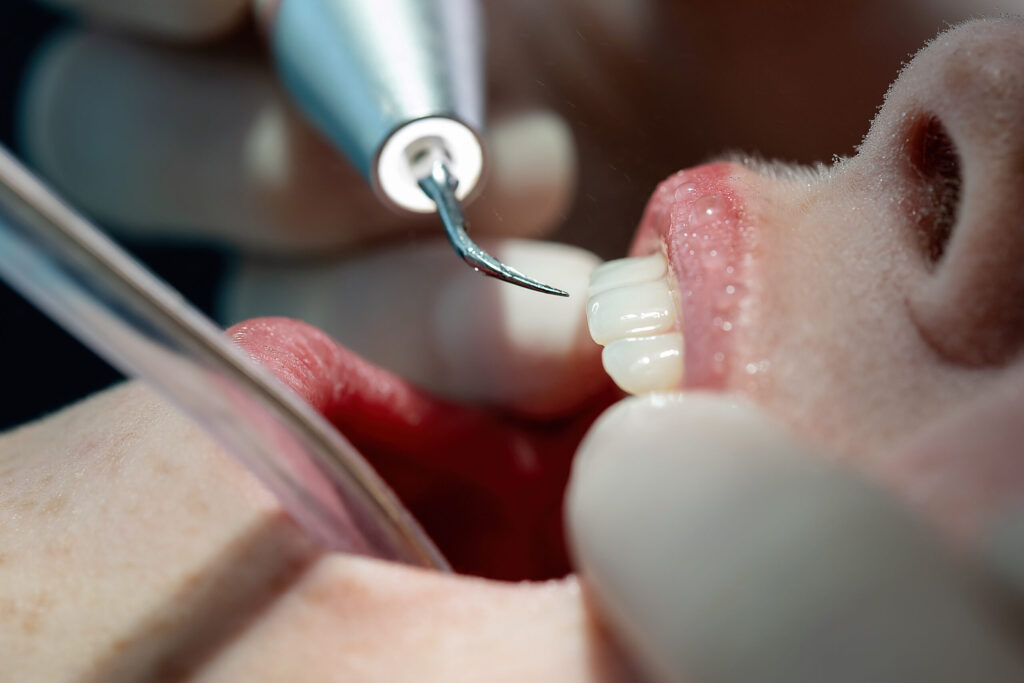
It’s about where the cleaning reaches
Neither is “better.” They’re not interchangeable — each is the right procedure for a different condition.
How do you know if you need a deep cleaning?
At every exam, your hygienist measures the space between your gum tissue and tooth with a small probe. Your dentist also looks for tartar below the gumline on X-rays, gums that are red, swollen or bleed easily, and bone loss.
A regular cleaning won’t fix active gum disease. The bacteria are below the gumline, out of reach of a routine cleaning, so it only cleans the surface.
Pocket depth guide
- 1–3mm Healthy
- 4mm or more Possible early gum disease
- 5–6mm or deeper Active periodontitis, usually needs SRP

Book a visit
No rush. No judgment. No surprises.
What happens during a deep cleaning
Usually two visits
One for each half of the mouth, so each side can begin healing before the other is treated.
Numbing first
Because it goes below the gumline, the area is numbed. You’ll feel pressure and movement, not pain.
Scaling and root planing
We remove tartar and bacteria below the gumline, then smooth the root surfaces so the gums can reattach.
Recovery and follow-up
Expect some tenderness for a few days. A few weeks later we re-check your pockets and set a maintenance schedule.
Book a visit
No rush. No judgment. No surprises.
Common questions
Does a deep cleaning hurt?
How much does a deep cleaning cost?
How do I know if I really need a deep cleaning?
Can I just get a regular cleaning instead?
Will I need deep cleanings regularly?
Book a visit
No rush. No judgment. No surprises.